

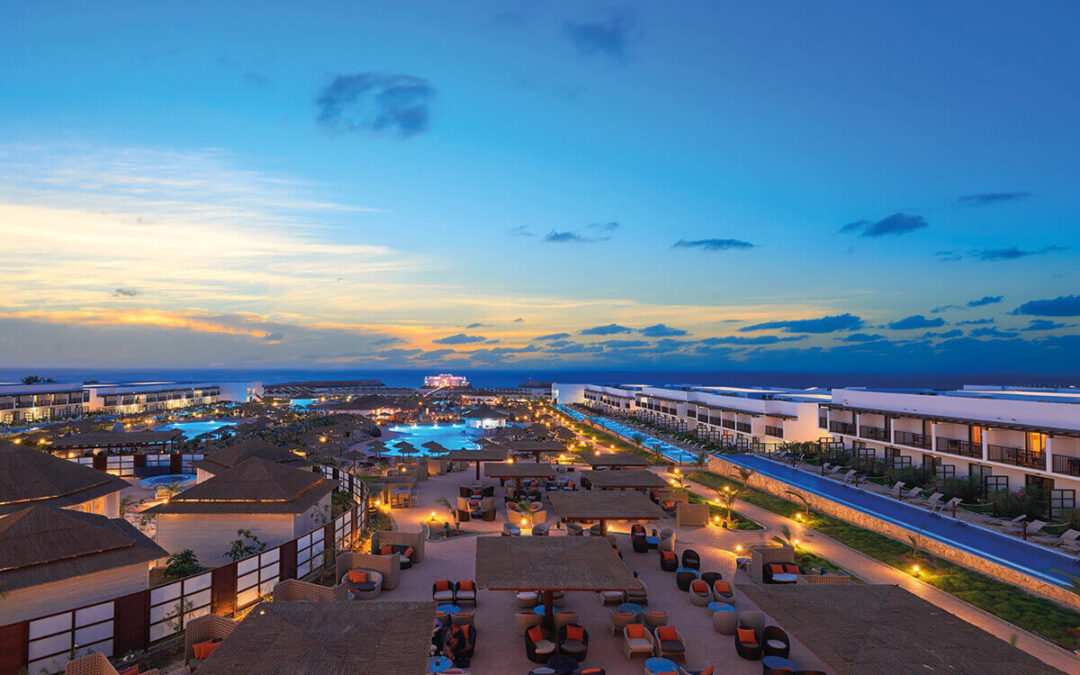
Cape Verde is a relatively small country, but its size can be measured in several different ways. The island nation has a total land area of around 4,033 km², a population of approximately 527,000 people, and is made up of 10 islands, 9 of which are inhabited.
However, these figures don’t necessarily tell the whole story. Cape Verde is spread across an archipelago in the Atlantic Ocean, meaning that the distance between its islands and the differences between them can make the country feel much larger than its land area suggests.
So, exactly how big is Cape Verde? Let’s look at the different ways its size can be measured.
How Big Is Cape Verde Overall?
Cape Verde covers approximately 4,033 km², making it a relatively small country in terms of landmass. It is an archipelago consisting of 10 volcanic islands and is located around 450–550 km off the coast of West Africa, depending on the point of reference.
The islands are divided into two geographical groups:
- Barlavento (Windward Islands): Santo Antão, São Vicente, Santa Luzia, São Nicolau, Sal and Boa Vista
- Sotavento (Leeward Islands): Maio, Santiago, Fogo and Brava
9 of the 10 islands are inhabited, with Santa Luzia being the only uninhabited island in the main archipelago.
While Cape Verde’s total land area is relatively small, its islands have very different landscapes. The flatter eastern islands of Sal, Boa Vista and Maio are known for their beaches and more arid landscapes, while islands such as Santo Antão and Fogo are much more mountainous. Fogo is home to the country’s highest point, reaching around 2,829 metres above sea level.
This means there is considerably more geographical variety packed into Cape Verde’s relatively small landmass than you might expect.
The Size of Cape Verde’s Islands
Cape Verde has 10 main islands, of which nine are inhabited. The islands stretch across the Atlantic in a roughly horseshoe-shaped formation and are divided into the Barlavento and Sotavento groups.
The islands include:
| Island | Approximate Area | Inhabited? |
| Santiago | 991 km² | Ja |
| Santo Antão | 779 km² | Ja |
| Boa Vista | 620 km² | Ja |
| Fogo | 476 km² | Ja |
| São Nicolau | 343 km² | Ja |
| São Vicente | 216 km² | Ja |
| Sal | 216 km² | Ja |
| Maio | 69 km² | Ja |
| Brava | 64 km² | Ja |
| Santa Luzia | No |
The islands vary considerably in both size and character. Some are primarily associated with beaches and resorts, while others are better known for mountains, hiking, culture and dramatic volcanic scenery.
How Big Is Cape Verde by Population?
Cape Verde has a relatively small population. The World Bank estimates that the country had a population of approximately 530,000 people in 2025.
For comparison, that is significantly fewer people than live in many individual cities around the world. For example, London’s population is around 9.12 million people.
The population is also not evenly distributed across the islands. Santiago is the largest and most populous island, and it is home to Praia, the country’s capital. The eastern islands, including Sal and Boa Vista, are much more closely associated with tourism and have relatively smaller permanent populations.
This can create an interesting contrast for visitors. Some of Cape Verde’s most popular tourist destinations can feel lively and busy during the holiday season, despite the country itself having a relatively small resident population.
How Big Is Cape Verde’s Tourism Industry?
Tourism is one of the most important ways to understand the scale of Cape Verde as a holiday destination.
In 2025, Cape Verde’s accommodation establishments recorded 1.2 million guests, an increase of 6% compared with 2024. These visitors accounted for more than 6.12 million overnight stays.
That means the country welcomed more than twice as many hotel guests as its entire resident population in 2025.
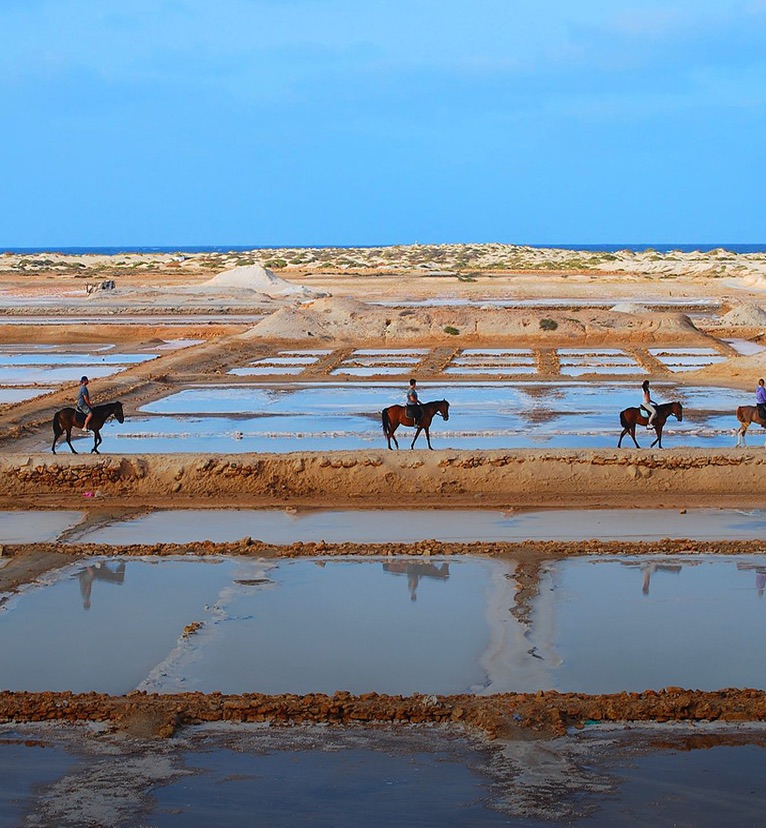
Tourism is also concentrated on particular islands. In 2025:
- Sal accounted for 57.7% of recorded arrivals
- Boa Vista accounted for 24.4%
- Santiago accounted for 8.1%
- São Vicente accounted for 4.4%
Non-residents accounted for 95.5% of recorded arrivals, highlighting just how important international tourism is to Cape Verde.
The UK was the largest source market for non-resident visitors in 2025, accounting for 29.3% of arrivals from outside Cape Verde.
How Long Does It Take to Travel Around Cape Verde?
There isn’t one answer to how long it takes to travel around Cape Verde because the country is made up of separate islands.
If you’re staying on one of the smaller islands, you can often explore a significant portion of it within a holiday. On larger or more mountainous islands, however, journeys can take considerably longer because of the terrain and road network.
Travelling between islands also requires additional planning, with flights and sea connections providing links between different parts of the archipelago.
For many holidaymakers, this isn’t necessarily a disadvantage. Instead, it means you can choose an island that suits the type of holiday you want rather than trying to see the entire country in one trip.
Does Cape Verde Feel Like a Small Country?
For many tourists, Cape Verde will feel relatively small and easy to navigate, particularly if you are staying in one of its main resort areas.
However, it doesn’t necessarily feel tiny. The combination of multiple islands, varied landscapes and significant distances between destinations means there is plenty of scope for exploration.
The experience will also depend heavily on where you stay. Sal and Boa Vista are particularly popular for traditional beach holidays, while islands such as Santiago, Santo Antão and Fogo offer different experiences for visitors who want to explore beyond the resorts.
In other words, Cape Verde is small in landmass but diverse in what it offers.
Is Cape Verde Big Enough for a Two-Week Holiday?
Absolutely. While you could spend a two-week holiday relaxing almost entirely within one resort, Cape Verde has enough geographical and cultural variety to keep you busy if you want to explore.
For a relaxing beach holiday, staying on one island can be more than enough. If you want to see more of the country, you can use your trip to explore different towns, landscapes and islands.
The important thing is to choose your itinerary based on the type of holiday you want. Trying to visit too many islands in a short trip could leave you spending more time travelling, while focusing on one or two destinations allows you to experience them in greater depth.
Find Your Perfect Cape Verde Getaway
Whether you’re planning to explore the islands or simply want a relaxing base from which to enjoy the beaches and sunshine, The Lagoon has a range of hotels to suit your Cape Verde holiday.
From family-friendly resorts to adults-only escapes, find your ideal base and make the most of everything Cape Verde has to offer.
Explore our collection of Cape Verde hotels and start planning your next island getaway.
– Tortuga Hotel (Familie)
– Dunas Hotel (Familie & Groepen)
– Llana Hotel (alleen volwassenen)
– Laguna (Alleen volwassenen)
– Sol Dunas (Familie)
Is It Safe to Walk Around Cape Verde FAQs
Can you visit all of Cape Verde’s islands?
It is possible to visit multiple islands during a trip to Cape Verde, but visiting all 10 would require considerable time and planning. With nine inhabited islands offering different landscapes and experiences, most visitors are better off choosing a small number of islands based on their interests and itinerary.
How long does it take to fly across Cape Verde?
Cape Verde is relatively compact, but there are no domestic flights between every island. Where domestic air connections are available, flight times are generally short, although the total journey time depends on the route and connections. Travellers should check individual routes when planning to visit multiple islands.
How big is Cape Verde’s coastline?
Cape Verde has around 1,121 km of coastline, which is a surprisingly large figure relative to its 4,033 km² land area. This is because Cape Verde is made up of many islands that are fully surrounded by the ocean, which means there is much more coastline relative to its landmass.
 NL
NL  EN
EN  IT
IT  FR
FR  ES
ES  PT
PT